Inspiration for the artefact; Fiona’s story
This introduction explores the use of personal reflection in the development of leadership and of business.
I have a reputation for being creative and innovative. This creativity touches everything I do, from the design of programmes, the choice of visual metaphors and colourways, the setting up of rooms, to the quality of resources that I give to delegates.
The essence of the learning that enables me to do all of that with confidence has in itself been a journey of connecting, letting go and reconnecting with creativity.
This is the way of being which underpins how I got to the idea of the virtual quilt. Literally, it came to me when I wasn’t even thinking about the programme. In the spirit of openness and learning, I thought you might be interested in the back story to this acceptance and embracing of reflection, thinking and creativity.
I studied at Glasgow School of Art from September 1978-June 1983; formative years developing friendships, confidence, thinking and identity.
This was a very different learning experience from school. After the first year, you were pretty much left to get on with it, have the space to think and be creative, take responsibility, and produce something meaningful. Sounds like what I endeavour to do in my work with people like you and in my learning community.
At 18, I’m not sure I understood the concept and the gift of time and space that was on offer.
I now sing in the GSA choir and am reconnected to that part of my life with a different set of thinking, confidence and identity.
My reflection helps me to see how I have changed in terms of my confidence, thinking and identity. A friend of mine, from that time, always says it is ‘unwise to go back’. However, my current learning is encouraging me to learn from the past as well as from the emerging future, recognising that the past is a place of reference, not a place of residence.
I suppose, as a starter, I now consider myself to be a thinker, which in 1978, I would have never considered as a way to describe myself.
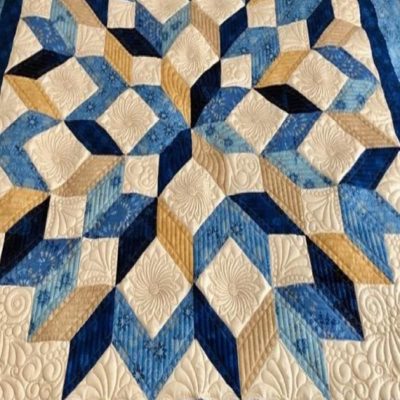
Back then, I didn’t think I was serious enough or talented enough to be where I was. An old tutor, Alf Avella, noted as he observed a lively debate between me and a fellow student, “ah…the socialist and the socialite!” No prizes for guessing which one was me!
I wonder now if I would be offended by that. I was the organiser, the fixer, the sorter, the doer; fundraising for trips, arranging dressers for fashion shows and planning regular nights out. My sense of belonging felt as if it came much more from my personality than from my self-belief in my artist capabilities, or the whole identity of GSA.
On reflection, I was confident, but not connected to my deeper purpose. In truth, I would have had no idea what that meant.
Forty years after starting at GSA, I have a very different view of myself. Refection and learning from others has helped me to understand:
- Behaviour is just as important as skills or knowledge
- I am responsible for my impact and the consequences of my behaviour
- It is not a competition, you just need to be the best you
- Inspirational leaders take risks, waves of change take us to places we didn’t expect and there is always learning
- Integrity is everything, sometimes you need to walk away
- Things are done for a reason at the time and then times change, it’s ok to be flexible and responsive
- I will fail, I will make mistakes, as long as I pick myself up, get the learning and try again, that’s fine – nobody died!
Capturing the Inspiration of Occupation
Once I had settled on the idea of the virtual quilt (a COVID necessity), I undertook a literature search and discovered a perfect paper by Doris Pierce, which you can download at the end of this section.
Doris’s article was published in the Journal of Occupational Science in August 2000 and is titled: Exploring the forgotten restorative dimension of occupation: Quilting and quilt use
Everything about the paper resonates with what The Elizabeth Casson Trust, myself, and the AHP facilitators wanted this programme to be for all of you. A restorative space, a creative space, and more than anything a place to stop and be present in the here and now.
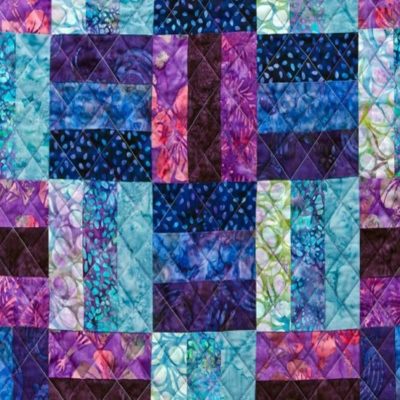
This is the abstract:
Restorative, or restful, occupations serve to renew depleted energy resources and result in an improved physical and mental state, with feelings of regeneration during and after participation. Restorative occupations include sleep and quiet focus activities such as quilting. Historically, the concept of restoration has been a neglected dimension of occupation within the fields of occupational therapy and occupational science. The process of quilting is used in this article as an example of a restorative occupation. Restoration from quilting may be gained through the experiences of meaning, tradition, ritual, and rite of passage that quilting provides. Quilt use may be restorative as well, through associations with sleep, meaning, and the sensory qualities of quilts. Both quilting and quilt use have therapeutic benefits that promote restoration.
And the conclusion:
In occupational science and occupational therapy, the restorative dimension of occupation has received little theoretical or empirical attention. Western valuing of productivity above other aspects of human experience has led to a dangerous neglect of inquiry into the ways in which restorative occupations renew health and the capacity for occupation. The restorative dimension of occupation offers occupational science rich realms of insight awaiting discovery. Until restoration is considered a critical characteristic in the understanding of occupational experience, there will continue to be serious limitations in the ability to examine such questions as occupational balance, life quality, the therapeutic nature of occupation, or the tie between occupation and health.
Capturing the Inspiration of Your Leadership Journey
At the beginning of this programme, you invited Appreciative comments from your line manager and chartered your course by creating a Personal Leadership Compass. You have explored your communication and impact, and you have used Appreciative Inquiry to positively seek the thoughts of others.
You will no doubt have been inspired, frustrated, felt you didn’t have enough time, and held that personal mirror up on a regular basis.
The invitation now is to create a square for our collective quilt. Everyone involved in the programme, including facilitators, will be asked to do this.
Guidance
- Whatever you create it must be 20cm x 20cm
- This could be a handmade image as you did with your compass, in which case it needs to be really well photographed on a white background
- This could be an image you make on a PowerPoint slide in which case remember to set the slide size before you start
- Ideally, this is not an image you have just downloaded
- Your image should consider the themes of restoration, occupation, personal leadership and the future
- The colourways should be blues/ greens, otherwise, it’s hard to put together
- Ideally, use traditional quilting patterns as inspiration for shapes and patterns
Capturing the Inspiration of Creating a Patriotic Quilt
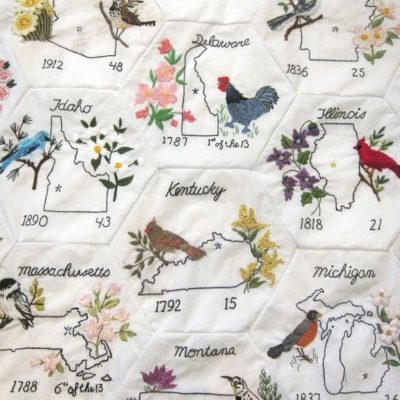
Dee Christie shared the story: The Surprising Complexity of an Unfinished American Quilt at our final days. It has a real resonance with your work on the quilt squares.
The Alabama Quilt Makers Who Shook America
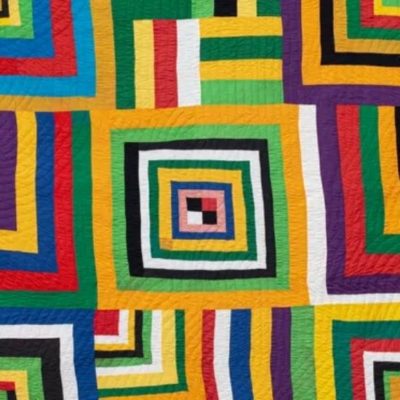
‘The equals of Klee and Matisse’ – the Alabama quilt-makers who shook America by making quilts to keep the cold at bay.
Virtual Quilt
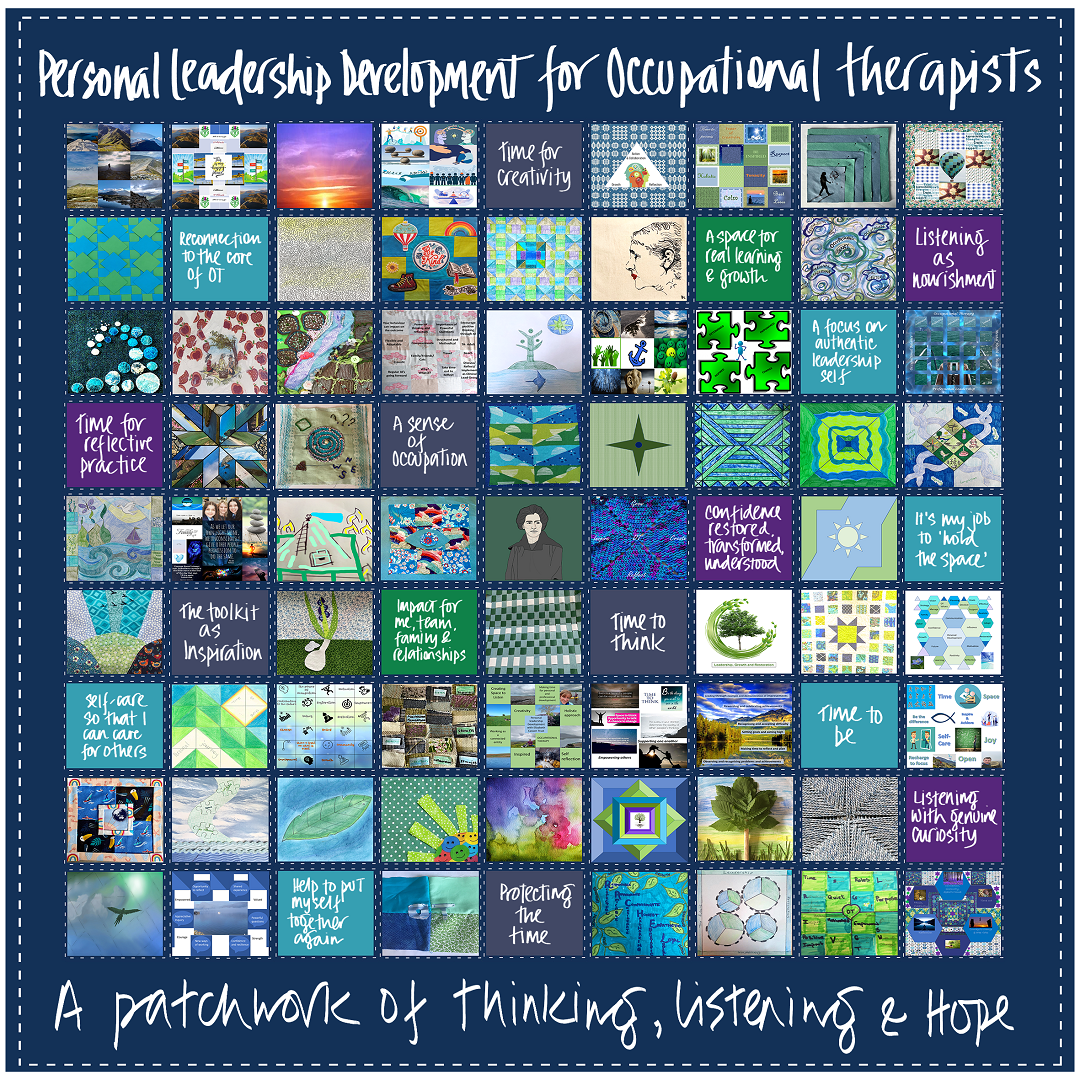
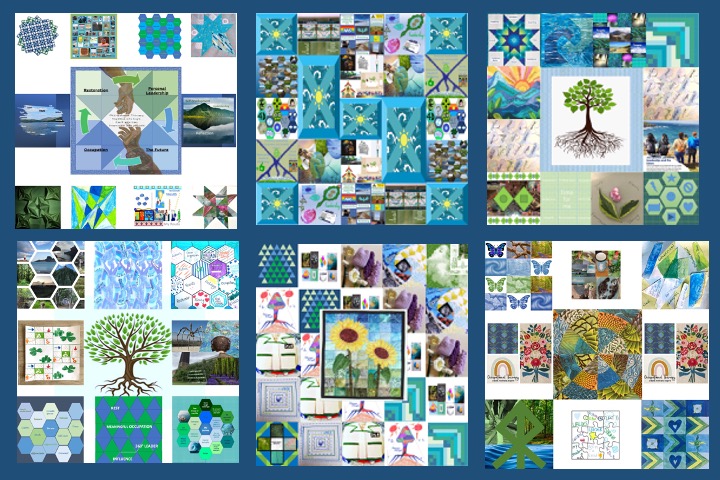
Below are the completed Quilt Designs from Casson 2021-2022 and Casson 2023.